

Early on a Sunday in July 2019, police arrived at Kim Devins’ house in upstate New York with a story that made no sense. They were there to do a “welfare check” on Devins’ 17-year-old daughter, Bianca. They said they had received reports from people who feared she may have been “hurt”. Bianca had gone with her friend Brandon Clark to a concert in New York City, a four-hour drive away. “Did they mean that they’d been in an accident?” says Devins. “The police bodycam footage from that time shows how confused I was.”
Amid it all, Devins called her dad, who lived close by, to ask him to come over. Somehow, while making that call, she realised that something dreadful had occurred. “I always pinpoint it to that exact moment, even though we didn’t understand what was happening,” she says. Her body knew before she did that she had lost her daughter. “All of me shook. I could almost see myself from the outside. It was as if my brain shut down to protect me and I left my body. I don’t think I’ve fully returned since.”
Clark had taken a knife to Bianca’s throat and murdered her in his car. He then photographed her mutilated body and posted the images across multiple social media platforms. On Discord, 4chan, Instagram and Snapchat, they were seen, spread and celebrated by an online community of “incels”, who called Clark “a legend” and made memes from the pictures.
Seven years on, the images still circulate. Just two weeks ago, one was sent to Devins from an anonymous account, an act she describes as “psychological terrorism”. Her daughter’s murder could hardly have been more public and yet Devins still can’t quite believe it happened. It’s too much horror to allow in. “It doesn’t feel real,” she says. “When I talk about it, it just doesn’t feel as if I’m talking about my own child. I don’t think I could function if I fully accepted it. I think I’m still waiting for her to come home.”
In some ways, says Devins, she and Bianca had grown up together. Devins was a young mum, pregnant with Bianca at 17, and then had Olivia, Bianca’s younger sister, two years later. The family lived in Utica, New York, where Devins had grown up, near her extended family. (Devins’ marriage to Bianca’s father ended in 2015.)

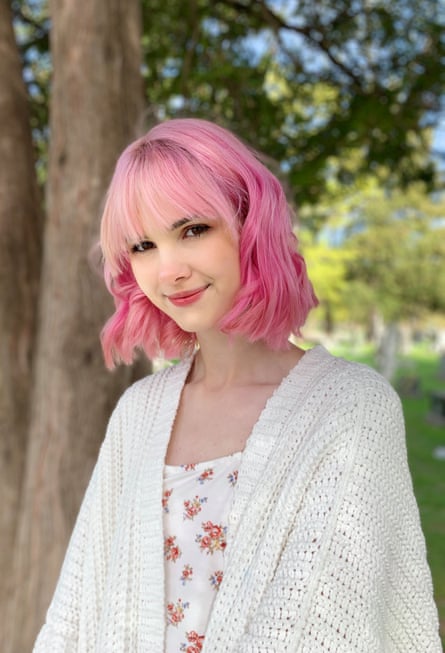
Although Bianca had been an easygoing child, in her teens she had struggled with anxiety, depression and manic episodes and was diagnosed with borderline personality disorder. By February 2019, though, she had returned home greatly improved from a long stay in a residential unit. She went back to school, reconnected with friends, graduated and lined up a place at college. She hoped to study psychology. “She was happy, on track, she was really doing well,” says Devins. “That’s the hardest part. She’d hung on and fought. She did so much work – and then she was taken from us.”
The internet had been Bianca’s escape and support during her darkest times. She had many social media accounts, identities and online friends. “She found a great community of people like her, with similar mental health issues,” says Devins. But this was also where Bianca met Clark, who lived 45 minutes away. Initially Instagram friends, they met in person in May 2019. Devins knew that Clark had a tumultuous background, but not the extent of it. In fact, Clark’s father had been jailed for holding his mother hostage at knifepoint and Clark had spent his youth in and out of foster care. “When we met, he seemed normal, very polite,” she says. “There were no red flags. I remember Olivia spending time with them both and saying to me: ‘I’m so glad Bianca is hanging out with people in real life.’”
Many falsehoods surround Clark and why he did what he did. It is true that he and Bianca had been involved briefly and that she did not want an exclusive relationship. Clark had driven them to a concert that night, 13 July, and on arrival found that Bianca had arranged to meet a third person there, too, someone she liked. Clark saw them kiss. But he had not murdered her in a spontaneous fit of jealousy. He had planned it meticulously, at least a week in advance, researching the carotid arteries, major blood vessels in the neck and “how to kill or incapacitate someone”. He had hidden a knife in his car. “The investigators have told me he was obsessed with murder,” says Devins. “It was something he wanted to do. If it hadn’t been Bianca, it would have been someone else.”
After the concert, on their journey home, while Bianca slept, Clark began his cryptic social media posts. (“Here comes Hell. It’s redemption, right?”) Later that night, the brutal, bloodied images of Bianca’s body were posted on various platforms, with more captions (“I’m sorry Bianca” and “Sorry fuckers, you’re going to have to find somebody else to orbit”). Clark spray-painted a message on the ground beside his parked car (“May you never forget me”), called the police, stabbed himself in the neck, took selfies, made more posts.
In the ambulance, he asked how many news channels were covering the story. “Everything he did was for maximum attention,” says Devins. “This wasn’t an ‘internet crime’ – Bianca could have met him anywhere and social media didn’t make him murder my daughter. But it did give him a platform to show it off. It gave him the attention he craved.” Clark is serving 25 years for murder.
In the immediate aftermath, the enormity of losing her daughter drowned out everything else. “I really didn’t grasp what was going on with social media,” says Devins. “I remember someone saying that Bianca was trending at No 1 on Twitter. I thought it was just the news of her passing. I did not know that photos were attached.” Her family held her up. Her brother identified Bianca’s body. Her father made most of the funeral arrangements, choosing the burial vault when Devins couldn’t. “He picked out the most beautiful pink glitter vault I have ever seen,” says Devins. “People had set up a GoFundMe and we didn’t need money, so my brother had the idea of using it for a scholarship. He set it up with my dad.” The Bianca Michelle Devins memorial scholarship helps local psychology students who want to work in adolescent mental health, as Bianca planned to do.
Although Devins barely felt able to engage with the world – “I don’t think that I was functioning at all,” she says – very soon she had no choice. “The images were everywhere; everyone was seeing them,” she says. “It was the scale of it. This was my child and I had to protect her. We needed to get those pictures down.”
Bianca had not been an influencer – she had about 2,000 followers on Instagram. Within days of her murder, though, that number had risen to more than 160,000. “‘Incel’ groups were the main perpetrators spreading the pictures and also sending them to family members with vile messages, such as ‘She deserved it’,” says Devins. “Bianca was everything they hated. She was a really smart girl, very pretty; a lot of guys liked her. She was also intuitive and aware. She recognised grooming in her online community and had helped a lot of girls get away from some dangerous situations.”
When police contacted social media platforms to request the removal of the images, they were told that nothing could be done. Apparently, they were spreading too fast. “I started making calls, too, but it was so difficult, because we could not get hold of a person,” says Devins. Through desperation, Devins was able to get the personal number of her local congressman, Anthony Brindisi. (He was married to her best friend’s sister’s friend.) “By the beginning of August, he was talking to Facebook, Instagram and Twitter,” says Devins. “Because of him, we managed to get a ‘point person’ to get things removed.”
In 2020, Brindisi introduced Bianca’s Law in Congress, which would have required platforms of a certain size to have a dedicated office for the identification and removal of content violating moderation standards. It didn’t pass. However, in 2022, a different Bianca’s Law within New York state criminalised the nonconsensual sharing of personal images of crime victims.

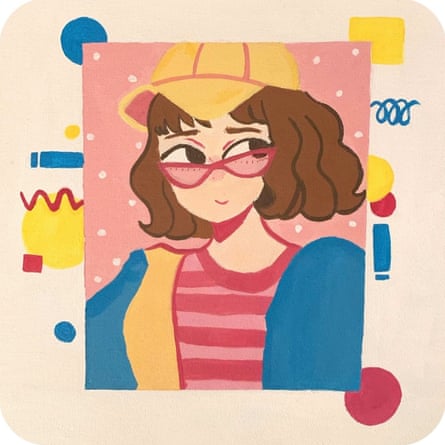
It’s a start, says Devins. “These companies need crisis-response centres, where people respond to real-time reporting,” she says. “Right now, the pictures are still being uploaded on social media. Sometimes they’re removed, sometimes they aren’t – and honestly, since Trump was re-elected, all the safeguards have been pulled back. It’s like the wild west on the internet. There’s no regulation at all.”
But she isn’t giving up: “If I don’t fight for social media accountability, if I don’t try to get every picture taken down, Bianca would be so disappointed in me,” she says. “She really did have this extraordinary strength and I think she is holding me up, giving me the strength to fight for her, too.”
In 2017, Bianca and Olivia had learned that their father’s girlfriend, Kaleigh Rimmer, was pregnant. Soon after, his relationship with Rimmer ended, leaving her potentially homeless, so Devins and her girls took Rimmer in, along with baby Maddie and Rimmer’s three other children. “It seems like an odd dynamic, but for us it came very naturally,” says Devins. “You couldn’t tell Bianca that the children were her step-siblings – they were just her brothers and sisters – and she absolutely adored Maddie. They had such a connection. She used to say that Kaleigh had Maddie just for her.
“Now, I think that Maddie coming into our lives is what saved my life,” Devins says. “When we lost Bianca, Olivia was 15. She did not want to be home all the time. She did not need me to get up on a daily basis and get her dressed and feed her. Maddie did need that, so that’s what I did – and it helped me so much.”
Maddie is eight now. Although the Rimmers no longer live in their house, they are nearby, with Rimmer and Devins sharing Maddie’s care. Devins, who works from home for an insurance company, still has Olivia with her, as well as Olivia’s two-year-old son. “I have a grandson now,” she says. “Momentous moments like that are hard, because Bianca would love her nephew so much. But he’s another reason to keep going and another reason to keep trying to make the internet safer. I don’t want any of these kids to see those pictures.”

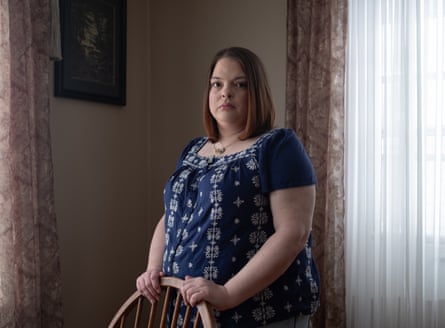
A blanket ban on social media shouldn’t be the answer, says Devins. In fact, through all this, the same platforms that have tormented her have also been a source of solace. In the days after Bianca’s murder, as the pictures spread online, an army of teenage girls, Bianca’s friends and followers, attempted to “drown out the gore” by flooding the relevant hashtags with pictures of pink skies, hearts and Hello Kitty.
“They still do this to this day,” says Devins. “I have to say, they are an amazing group and they have really helped me. I absolutely love people reaching out to tell me how much Bianca helped or inspired them, or that her life meant something to them even if they never met her. When you lose someone like this, your world stops and no one else’s does. Then someone sends a message and you see that she’s not forgotten.”
In this way, social media has helped keep Bianca alive. “I wouldn’t want to lose that – and we shouldn’t have to just because social media companies refuse to act responsibly. I just want platforms to be held properly accountable for their content.”
She still feels Bianca all around her. “I was thinking the other day: how has it been seven years?” says Devins. “Right before Bianca left for the concert, she came up, gave me a hug. I said: ‘I love you; be safe.’ She said: ‘I love you.’ How was that seven years ago? I haven’t fully accepted it. I don’t know that I ever will.”
About three months after losing Bianca, Devins saw her in a dream. It felt so real. “She told me: ‘You need to be happy,’ and I was crying and saying: ‘I can’t,’” she says. “Bianca had so many plans for us. She used to say that, when she’d graduated college, we would all take adult trips together. She’d say: ‘You’re still young! You’re still cool! You, me and Olivia are going on a cruise.’ She wanted us to go to Hawaii, to Europe and Japan – Japan was her big thing.
“She really wanted our family to be happy. I know that dream was definitely a visit from her – and that was her message. It’s so hard to do. But I try to remember it.”