
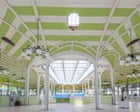
The pastel tones of Vichy in the Auvergne
Vichy is not on everyone’s radar as a must visit French town, but it really is a delight to spend a few days in. I discovered it while on a bicycle trip around central France, and its famous waters did wonders for my tired legs and muscles. Vichy is a historic spa town famous for its spring waters and its art nouveau and belle époque architecture. A thriving cultural scene means that, whenever you visit, you’ll find concerts, theatre, opera and exhibitions, especially at the town’s opera house and the iconic Grand Casino. Vichy is also a shopper’s paradise, with more than 500 boutique shops in the heart of the town. When all that shopping and walking has worked up a thirst, taste the famous Vichy waters for free at Hall des Sources (listed on the Accidentally Wes Anderson website). The city is easy to explore on foot or by bike, with riverside paths along the Allier River, pretty neighbourhoods with pastel-coloured villas, and plenty of outdoor cafes. Being there felt like witnessing a Renoir or Matisse painting coming to life before my eyes.
Nicoletta
Canals, lakes and flowers in Savoie

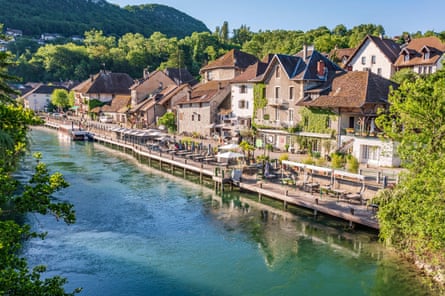
Chanaz on the north-western edge of the Savoie is a picturesque village I love to visit in summer. One the best little trips is to rent a canoe or electric boat and glide along the Canal de Savières to the Lac du Bourget. The village boasts colourful flowers, old narrow streets, cycling lanes, and some of the best ice-cream I’ve ever tasted. There are plenty of affordable accommodation options around the Lac du Bourget, and many more villages to explore in the area.
Juliette B
Every week we ask our readers for recommendations from their travels. A selection of tips will be featured online and may appear in print. To enter the latest competition visit the readers’ tips homepage
–
“,”credit”:””}”>
Profile
Readers’ tips: send a tip for a chance to win a £200 voucher for a Coolstays break
Show
Guardian Travel readers’ tips
Every week we ask our readers for recommendations from their travels. A selection of tips will be featured online and may appear in print. To enter the latest competition visit the readers’ tips homepage
–
The ‘most beautiful kilometre in France’ is in Normandy

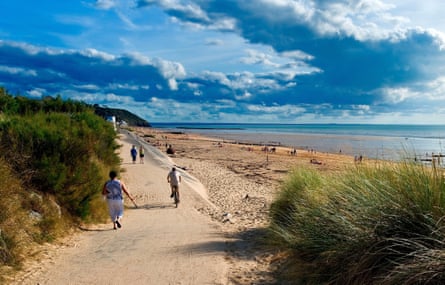
Avoid the crowds and see the wonder of Mont-Saint-Michel from another angle, the Falaises de Champeaux (Champeaux Cliffs), with a view much admired by General Dwight Eisenhower in the second world war after he had set up an allied HQ in nearby Jullouville. The half-hour car journey from Granville to medieval Genêts takes you through the old-fashioned and unspoilt seaside village resorts, cafes and restaurants of Saint-Pair-sur-Mer, Jullouville, Carolles, and before you reach the delightful village of Saint-Jean-le-Thomas, you can take in the panoramas of the “most beautiful kilometre in France”.
Dee
Modernism and glass in Provence

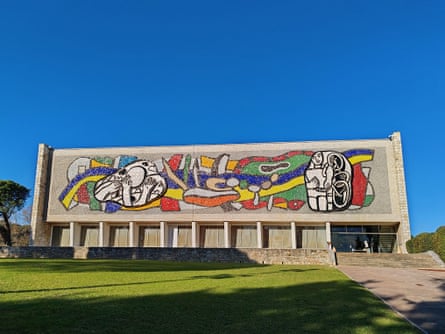
The Fernand Léger National Museum in Biot, near Antibes, is one of our favourite places to spend an afternoon. The temporary and permanent displays of Léger’s modernist works are interesting, but it’s the stunning exterior and calm surrounding grounds that are really special. To make the most of your time, La Verrerie de Biot is a two-minute drive away. Here you can watch free glass-blowing demonstrations and browse the glass creations in the shop.
Rowan De Saulles
Walking in the shadow of Robert Louis Stevenson, Massif Central

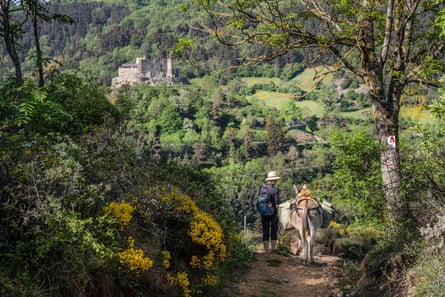
Last August I walked the southern half of the Chemin de Stevenson (designated the GR 70) – a 140-mile footpath in the Cévennes that follows the route taken by Robert Louis Stevenson in 1878 with his recalcitrant donkey, Modestine. I averaged 15 miles daily, hiking along rocky trails and woodland paths. Accommodation comprised basic hostels, each about €50 a night; one had lodged RLS 147 years previously. I ate dinner at local bistros; breakfast came from boulangeries. I met a few fellow hikers but was mostly accompanied only by the words from Stevenson’s account, Travels with a Donkey, as I tried to match his footsteps to my own. The full route crosses four departments: Haute-Loire, Ardèche, Lozère and Gard.
Jane
Leonardo’s resting place on the Loire
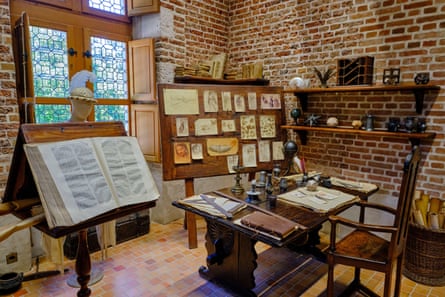
Amboise, a delightful small town on the Loire, boasts three chateaux. The most imposing is the Château Royal d’Amboise, home to Francis I, who lent a spare chateau, the Clos Lucé, to Leonardo da Vinci for the last three years of his life (1516–19). It is the Clos Lucé that delights the most, with its full-sized mock-ups of Leonardo’s designs dotted around the park, while models of other inventions are displayed in the cellars. Leonardo’s bedroom, kitchen and atelier are all reproduced in their original rooms. Leonardo’s last resting place is a dedicated chapel in the Château Royal – the Chapel of Saint-Hubert. The third chateau, Gaillard, is renowned for its Renaissance landscape architecture and gardens.
Pete Mitchell
Cycling between Normandy pools
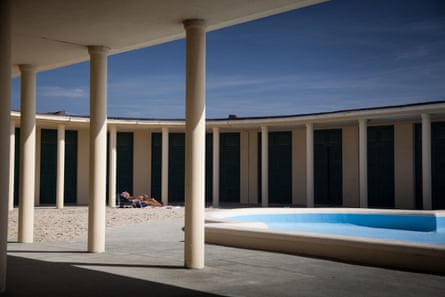
I took my vintage Raleigh Chopper on the night ferry from Newhaven to Dieppe and cycled the Normandy coast with essentials packed in a small bag. I stopped at Honfleur, Deauville, Caen and Mont-Saint-Michel and enjoyed swims in Trouville’s art deco lido, Deauville’s beautiful seawater Olympic pool, the tidal sea pools at Saint-Pair-sur-Mer and Granville. The superb Les Bains de Dieppe has sadly had to permanently close since my visit because of structural problems. I used trains when the weather was bad and to get back to Dieppe.
Victorie
Provence in the frame
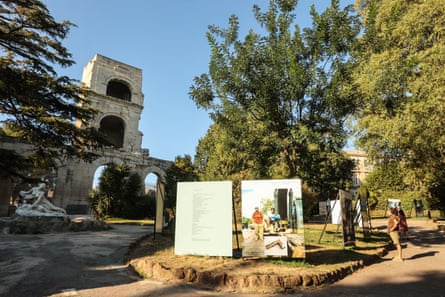
Base yourself in Arles during the long summer for Les Rencontres d’Arles (6 July-4 October), when cutting-edge photography fills an eclectic mix of venues: romanesque churches, cloisters, the town hall, shady parks and even a Monoprix warehouse, all within easy walking distance. There’s accommodation to suit all budgets, including many in old Arlésienne homes. Between exhibitions, trace Van Gogh at the Starry Night Café and along the canal towards the Bridge at Arles, or climb the Roman arena for wide Provençal views. In September Camargue rice festival with its tractor-pulled floats, music and rice flung like panto sweets is also great fun to visit.
Stephen Edwards
A dash of Tuscany in Pays de la Loire

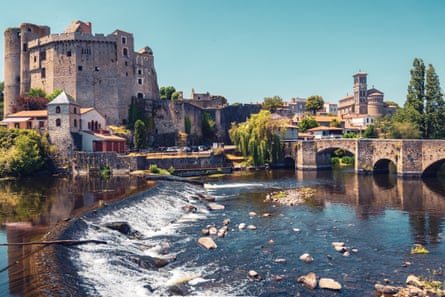
I caught my first glimpse of Clisson while visiting nearby Gétigné. There is simply no mistaking you are south of the Loire here. It’s a delightfully surprising town in the muscadet wine region with a distinctly Mediterranean feel where terracotta roofs and ochre tones abound. On a hot summer’s day, be transported from Loire-Atlantique to Tuscany thanks to the Italianate-style architecture and sweeping views from the castle towards Domaine de la Garenne Lemot. Umbrella pines serve to accentuate the town’s characteristic ambience and tucked away on a charming sidestreet is one truly remarkable leaning specimen.
Richard Arnott
Winning tip: Canoeing in Nouvelle-Aquitaine
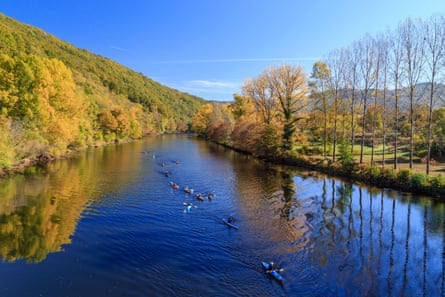
Corrèze, a rural department in the Nouvelle-Aquitaine, has lakes, gorges, sleepy farming hamlets and furry brown cows. It is a peaceful place even in the middle of August. We followed a switchback road to Smile Kayak, rented canoes, stuffed waterproof barrels with baguettes, beers and cheeses, and were delighted to find we had the gorge to ourselves. We paddled along the river where the Dordogne and Diège converge, watching red kites wheeling overhead and shattering the silence by shouting for echoes.
Cath Fischl

