
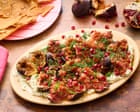
There are few fruits more evocative than the fig; heavy-bottomed, velvet-skinned, bursting at the seams with life. It’s also one of the oldest fruit tree cultivars, and rates mentions in the Torah, the New Testament, the Qur’an and the Bhagavad Gita. Depictions of figs appear in ancient Egyptian tomb paintings and reliefs, Indus Valley stone seals and other ancient artwork across the Mediterranean, Middle East and South Asia.
Indeed, while other fruits require quality control through a close whiff or a keen eye, figs need to be fondled for a full assessment. Weigh them in your palm to choose the heaviest specimens, then turn them bottoms-up to inspect their ostioles (the orifice through which pollinators penetrate the fruit) for juiciness – a little leakage is preferable, with an aroma that’s sappy or sweet rather than sour.


Speaking of sour, the tang of cultured milk in the form of yoghurt trod a similarly ancient path to figs. Versions of yoghurt, whether thin for drinking, thick and pot-set for scooping, drained and stored in oil or served as fresh cheese, can be found in texts and recipes across central Asia, the Levant and Mediterranean. It’s likely that milk was first preserved in this way by accident, while being transported in animal skins, before becoming a staple from breakfast through to supper.

Labneh is one of the most substantial applications, where yoghurt is strained through cheesecloth or muslin to create a simple and delicious fresh cheese. The leftover whey is also worth keeping to add to smoothies, curries and pancake mixes. It can even be frozen for up to six months.
The flavours of labneh and figs, rich and heady, are a beautiful, bountiful expression of the last gasps of warmer weather as we’re experiencing in Australia right now. It’s meant to be a longer fig season here, and this recipe is one of my favourite ways to serve them savoury. Tear them up to expose the glittering flesh in shades of baby pink through vermilion, then squish over labneh. It’s a light, dippy midweek supper, or a stunning vegetarian entree or starter that’ll stand up to any meaty carpaccio.
Once figs are gone, try this recipe with thinly sliced persimmon, juicy pears or fresh halved or roasted grapes.
Figs with a pomegranate molasses drizz on herbed labneh and pita chips – recipe
You’ll need to start this recipe at least eight hours beforehand to prepare the labneh, which you can easily do the night before – simply tuck the yoghurt into its muslin-lined hammock before you also retire to your own bed. The longer the yoghurt drains, the firmer the labneh.
You can also make the pita crisps up to three days ahead of time, as long as you store them in an airtight container. The dressing too can be made ahead – up to a day in advance, rendering this recipe a brilliant bring-a-plate or Avengers-assemble option for your next shindig.
Serves 4
10 sweet large figs, (or 12 smaller ones)
A handful pomegranate seeds (optional but excellent)
Extra-virgin olive oil, to finish
For the herbed labneh
500g natural yoghurt
¼ tsp fine salt
2 tbsp finely chopped chives, about half a bunch, plus extra for garnish
2 tbsp finely chopped dill fronds, about a ¼ bunch, plus a handful of fronds for garnish
Finely grated zest of half an orange (reserve the orange for below)
For the pomegranate drizz
2 tbsp pomegranate molasses
2 tbsp freshly squeezed orange juice (usually from half an orange)
60ml extra-virgin olive oil (¼ cup)
1 small garlic clove, bruised
For the pita chips
1 large pita bread
60ml olive oil (¼ cup)
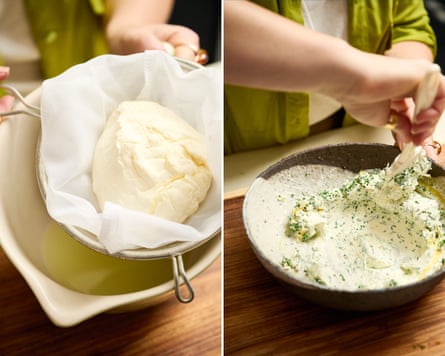
To make the labneh, line a sieve with a clean piece of muslin or cheesecloth, and place over a deep bowl. Spoon the yoghurt into the lined sieve. Cover and place the draining setup in the fridge for eight to 24 hours.
To make the crispy pita, preheat the oven to 200C/180C fan. Have a couple of large baking trays at the ready.
Slice the pita in half, through the equator, and open it up to reveal the fluffy insides. Place on the tray, fluffy side up, and generously brush with olive oil and season with flaky salt. Place in one layer on baking trays and bake for 10 to 12 minutes, depending on thickness, until golden and crispy.
Remove from the oven and allow to cool in trays. When cool enough to handle, break them into rustic chippies. If making ahead of time, store in an airtight container for up to three days.
To continue making the herby labneh, scoop the drained yoghurt into a medium bowl. Sprinkle in the salt, chives, dill and orange zest. Gently stir to combine. Taste and add more salt if needed.
To make the pomegranate drizz, in a small jar combine the pomegranate molasses, orange juice, olive oil and garlic, plus salt flakes and freshly cracked pepper. Close the lid and give it a good shake, then taste and adjust with more pomegranate, orange juice, olive oil or salt and pepper if needed.
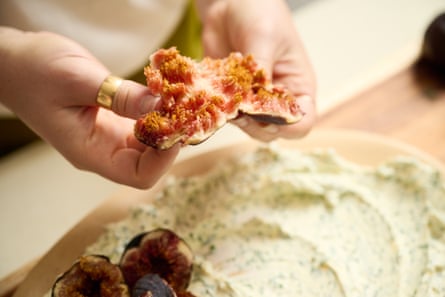
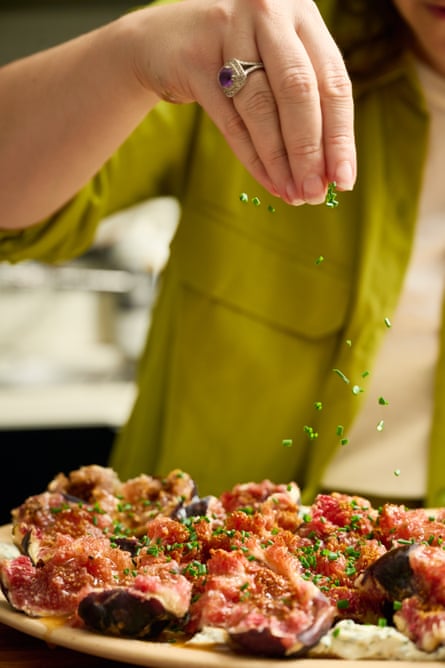
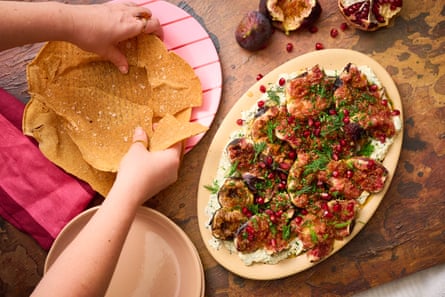
When ready to serve, spoon the labneh on to a shallow platter and swoosh with the back of the spoon to create soft artful peaks and valleys. Hold a fig bottom-side-up, then gently squeeze and tear apart. Repeat with remaining figs. Rest the torn figs, fleshy side up, on top of the herbed labneh.
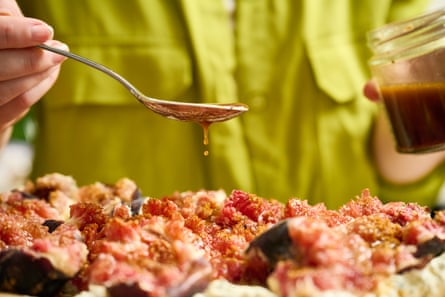
Give the pomegranate drizz jar another good shake, then drizzle over the figs. Scatter with the chives, dill fronds and pomegranate seeds (if using). Drizzle with one last flourish of extra-virgin olive oil and sprinkle with salt flakes for extra glisten. Serve with the pita chips on the side.