
Lunch ladies are getting a MAHA makeover.
The Food and Drug Administration’s $17 million pilot program aimed at helping schools serve MAHA-approved meals to students is up and running — and already reportedly seeing results.
FDA Administrator Marty Makary told The Post that nationwide, up to 70% of children’s diets now come from ultra-processed foods, which are often loaded with salt, refined sugars, cholesterol-spiking fats and a slew of lab-made additives you wouldn’t normally find in a home kitchen.
Over time, heavy consumption has been linked to health problems including obesity, type 2 diabetes, cardiometabolic disease, anxiety, depression and certain cancers.
But the new program is looking to facilitate a shift to healthier options — and at least one participating school has already reported “some impressive results” in cutting back on ultra-processed foods served to students.


“We think people should have freedom of choice and eat whatever they want,” Makary said. “But for schools who want to make a shift — [and] may not have the expertise, coaching, knowledge or direction, and are seeking it — we have this program.”
The pilot involves a research study whereby the FDA provides resources to schools, “mostly in the form of education and coaching and mentorship to help them transition to some healthier foods.”
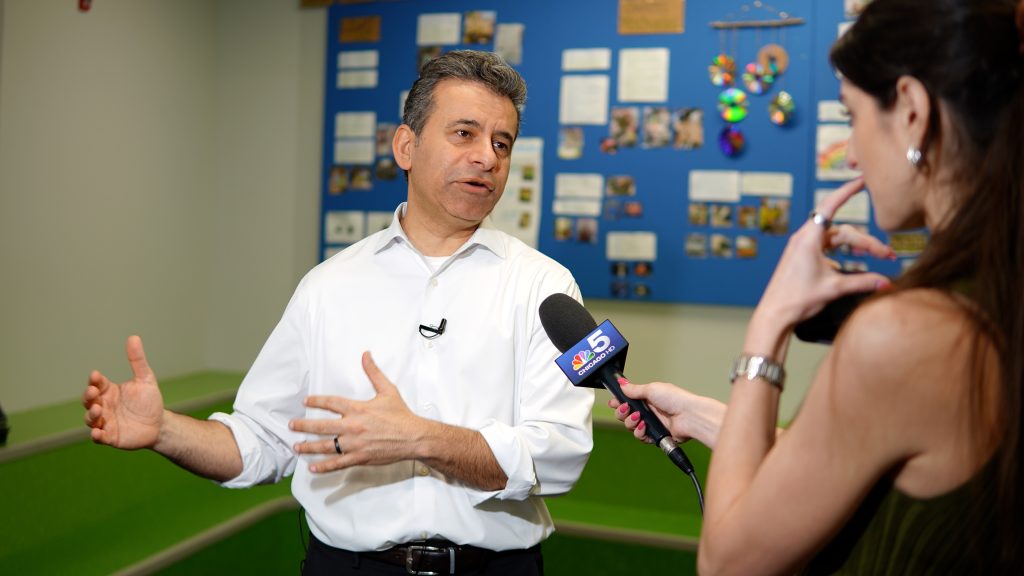
That effort was on display last Thursday, when Makary visited the Academy for Global Citizenship, a charter school on Chicago’s southwest side, to see how it has put the agency’s funding to work.
“They saw … a 70% to 80% reduction in total pesticide content and a 80% to 90% reduction in heavy metals by doing some basic things like shifting from using a pre-made processed bagel to making their own English muffins in-house,” he said.
In general, pesticides are used to protect crops from damage, but exposure to some of these chemicals has been linked to potential health risks — particularly in children, with studies suggesting connections to conditions such as cancer, ADHD and autism.
In fact, Health Secretary Robert F. Kennedy Jr. has been outspoken against the used of pesticides, calling them “toxic” and warning that they “are contaminating the US food supply.”
Just over a year ago, said he wanted to build an “off-ramp” from America’s reliance on them — though he backpedaled in February when President Trump signed an executive order declaring a new initiative to boost domestic production of glyphosate, the active ingredient in the infamous weedkiller Roundup.

Heavy metals, meanwhile, can accumulate in the body over time and contribute to long-term health issues, including impaired brain development and lower IQ in children, as well as heart disease, kidney problems and cancer.
The FDA honcho also said the academy switched “from using canned food to using some more fresh fruits” as well as cooking their own “dry beans.”
Other schools participating in the FDA study haven’t had the kitchen equipment to even get a healthier meal made, so the funding has gone toward replacing microwave ovens.
“Some schools don’t have enough ovens and they just microwave things,” Makary said. “One school got one of their bakers to bake the bread instead of buy the pre-made bread.”
An independent review committee selected more than a dozen schools to participate in the study, including in Illinois, Pennsylvania, Florida and Arkansas, Makaray and other FDA officials noted, each of whom get roughly $200,000 for the 2025-26 school year.
The FDA chief said that it’s likely the funding will give taxpayers more bang for their buck than other grants and programs in prior administrations.

“We found a grant that was studying giving Botox to bunny rabbits,” Makary recalled. “The scientific community can just get so myopic thinking about what to study. They can’t see the forest from the trees sometimes. So we’re literally serving our kids low quality food as we fund drugs for obesity and diabetes.
“So we just said, ‘Hey, can we have a more balanced approach?’”
More than 30 million kids get their daily food from school lunches, and the program could inspire changes to additional communities. At least $400 million in USDA dollars per day are spent feeding the youth.
Makary said they wanted to explore whether it’s possible to transition to healthier food and whether it would have an impact on the total number of chemicals kids are consuming.
In the US, more than 10,000 chemicals are allowed to be used in foods, including emulsifiers, thickeners, artificial colors, flavor enhancers and shelf stabilizers.
Ultra-processed foods — such as cookies, granola bars and sugary breakfast cereals — often contain multiple additives, averaging about seven per product.
The pilot may also help reduce costs over time — both for the schools and the US health care system.

“Ultra processed food in general is more expensive than some of the natural foods like eggs,” Makary said. “Two eggs, a piece of bacon and toast is about $2.80 in our price models.”
“With this whole modern movement to address the root causes of chronic diseases, we’re like, can we instead of just funding stuff on drugs, can we actually fund school meals and understanding the heavy metals that are in school meals?”
Across the country, three in four adults — or nearly 194 million people — are living with one or more chronic conditions, many of which are linked to diet and other lifestyle factors. Among school-aged children, that figure is above 40%.
The toll is significant: About 85% of US healthcare spending goes toward managing chronic diseases, and approximately one million people die each year from diet-related illnesses nationwide.
The FDA’s pilot might even take a step toward bringing the country together.
“This in an era where people are heavily polarized; this is a uniting issue — the health of children addressing food, quality and food safety,” Makary added.
In fact, former first lady Michelle Obama also championed the issue, advocating for the Healthy, Hunger-Free Kids Act that overhauled nutrition standards for school lunches to include more whole grains, fruits, vegetables and low-fat dairy options.
“So we’ve been focusing on issues that unite Americans, curing cancer, making the food healthier for children.”