



Three people have died after a suspected hantavirus outbreak on a cruise ship in the Atlantic Ocean, the World Health Organization (WHO) has told the BBC.
It reported one confirmed and five suspected cases. One UK national aged 69 is now in intensive care in Johannesburg, South Africa. Local officials later told the BBC he had the virus.
Hantavirus is usually passed to humans from rodents via their urine or faeces. It can cause severe respiratory illness. Rarely, it can be transmitted between people.
The UK Foreign Office told the BBC it was monitoring reports, and ready to support British nationals.
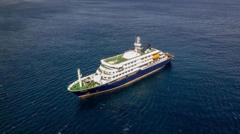
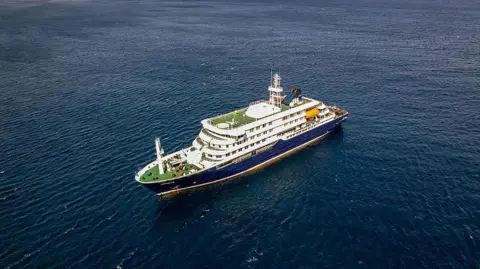
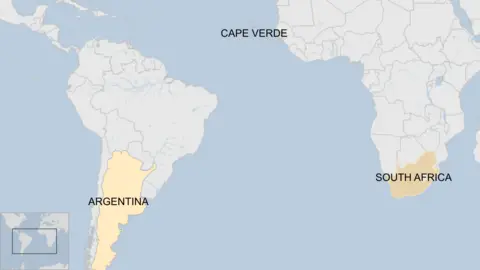
The outbreak was reported aboard the MV Hondius ship travelling from Argentina to Cape Verde.
The MV Hondius is run by tour company Oceanwide Expeditions.
According to an itinerary on its website, MV Hondius departed from Ushuaia in southern Argentina on 20 March and was expected to complete its journey on 4 May in Cape Verde.
It is described as a 107.6m (353ft) polar cruise ship, with space for 170 passengers in 80 cabins, along with 57 crew members, 13 guides and one doctor.
Foster Mohale, a spokesperson for South Africa’s health ministry, told the BBC there were about 150 tourists from various countries aboard the vessel.

Before the WHO confirmation of three deaths, Mohale told the BBC that at least two people had died.
He said the man, aged 70, and the woman, aged 69, were a Dutch couple.
The health official said the man suddenly became ill, developing fever, headache, abdominal pain and diarrhoea. He died on arrival on the island of St Helena, a British territory in the South Atlantic.
The woman also became ill on board and was evacuated to South Africa, where she died in a Johannesburg hospital.
The AFP news agency cited a source saying that the third fatality was still on board the ship.
Speaking anonymously, the source said and discussions were under way to decide whether two other sick passengers should be placed in isolation in hospital in Cape Verde.
The ship would then reportedly continue to Spain’s Canary Islands.
The WHO said it was helping co-ordinate between member states and the ship’s operators for the medical evacuation of two symptomatic passengers, as well as a full public health risk assessment and support for those still on board.