

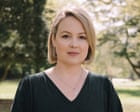
Kimberley Nixon’s memoir, She Seems Fine to Me, is out on 7 May, and she’s quite terrified. This isn’t an author worried by sales figures or reviews. Nixon’s book is an up-close-and-personal account of perinatal OCD. It tells of the dark, disturbing thoughts that taunted and haunted her after the birth of her son: her racing mind, relentless rumination, the Technicolor horror stories that played inside her head, always centred on harms to her baby. The book holds nothing back.
“Is it really brave or is it really stupid?” says Nixon. “In my head, I’ve written a book about what a horrible person I was and put it out in the world – and I have to keep reminding myself that’s not it. I’ve written a book about a mental health condition and trying to fight it.”
Its publication coincides with maternal mental health awareness week. “The nature of this – the content, the detail – is so taboo. You don’t want to share it. You keep it hidden, and that made me worse and stopped me getting better for a long time. I’m genuinely worried that people will misunderstand or read snippets and look at me differently and think I must be a horrible person to have those horrible thoughts – then all my insecurities about my OCD (obsessive-compulsive disorder) will come true.” On the other hand, this book might help set her free. “If I can do this,” she says, “if I can say it out loud and let it wash over me, it’ll be the biggest step in my recovery yet. Fingers crossed!”
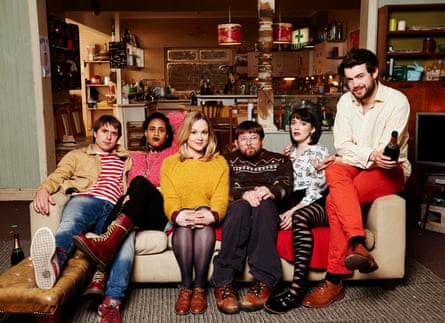
Most people will know Nixon as the Welsh actor who played “Slaggy Lindsay” in Angus, Thongs and Perfect Snogging, and the wayward Josie in Fresh Meat. Now 40, Nixon says she seems to have “moved casting brackets” – in the recent crime drama Under Salt Marsh, she played Shell, the bereaved mother whose son was found dead in a ditch.
There will be some people, though, new mothers especially, who know Nixon not for any of this, but more for her Instagram and Substack where she shares her complicated experience of motherhood. Talking about her son, now five and a half, she lights up. “He’s the happiest, most well-adjusted kid,” she says, “full into superheroes, curious about everything – he asks the best questions.” But his arrival dropped her into a dark space where she lost herself, feared for his safety, wanted to die and planned her suicide.
We meet in a cafe in Pontypridd, close to where Nixon grew up and where she now lives with her son and husband. (He attended the same school and they have been together for 21 years.) Neither are named in her book. They didn’t choose to be in the public eye, she says. “The least I can do is let them keep their names.”
She Seems Fine to Me reads like Nixon speaks – it’s sparky, crackling with rage, but also, somehow, laugh-out-loud funny. She describes her experience of infertility, IVF, then becoming pregnant, giving birth and bringing home her baby in a pandemic with little support available. Maybe its power is that, by the end, you question who could get through all that unscathed. Instead of seeming “abnormal”, Nixon’s poor mental health makes a lot of sense.
She and her husband had been trying for a baby for four years before the IVF that brought them their son. Her book digs into the detail, each bit of good news, then bad news, the hormonal highs and lows, the tests, egg collection and transfer, then constant monitoring. One time, newly pregnant, Nixon is in London for a voiceover, waiting to enter the studio, when her clinic calls to inform her that her latest blood tests show that she is about to miscarry. (She didn’t.) For each subsequent scan, braced for bad news, Nixon is alone because of lockdown rules. As her due date approaches, she becomes increasingly anxious – and writes to her MP – about the rules surrounding labour, which meant her husband couldn’t join her until she was 5cm dilated, and would have to leave one hour after the birth. (This was while the rest of the UK was being urged to “eat out to help out”.) “If I’d given birth in this cafe, I could have had five friends with me,” she says, “whereas in hospital I’d have to be on my own.
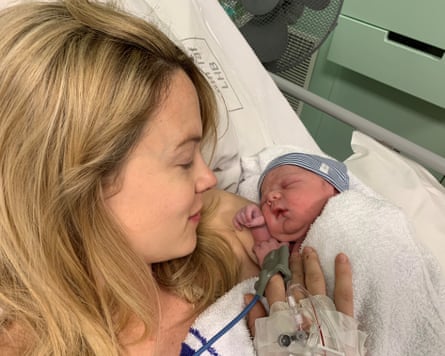
“It’s really interesting – I didn’t remotely put two and two together and think that maybe years of infertility and then IVF and the precariousness of being pregnant in a pandemic made me super vulnerable and anxious and aware of risk,” Nixon continues. “Then suddenly, they put this baby in my arms, I’d lost two pints of blood, my hormones plummeted – and something happened. As soon as they lifted him up and showed me, it was like somebody flipped a switch in my brain. The lights went out. It was bizarre because I’d read so much about instantly falling in love with your baby. What were they talking about? I felt the crushing weight of responsibility.”
Her hospital stay was, she says, a “waking nightmare”. Shortly after his birth, her son was transferred to the special care baby unit with possible sepsis. Nixon couldn’t go with him – she was having a blood transfusion – so her husband had to decide whether to remain with her, or go with their son. Whichever he chose would be the only one he’d be able to see from then on. (Covid rules prohibited moving between the two spaces.) Though Nixon pushed him to the door, that first stretch alone on the ward was perhaps the start of her spiralling, of believing the worst and seeing it in her mind’s eye. She became convinced her son had died and no one was telling her. In truth, he was fine, and was returned to Nixon hours later.
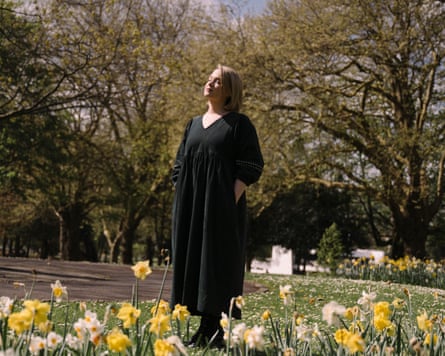
For the next few days until her discharge, she remained sleepless and hypervigilant in a hot, eerie, empty, brightly lit ward sealed off from the world. On returning home, another lockdown was announced and the clocks went forward. “Maybe it wasn’t all in my head,” she writes in her book, “that I was plummeting into both a darkness and an isolation, the likes of which I’d never known.”
Almost immediately, Nixon found herself second- and third-guessing every little decision involving her son. Some of her exhausting thought trails are in the book. Should she take him with her to the bathroom when she had a shower, to ensure he was safe? Or was that inappropriate? If she turned her back on him to sleep, did it mean she didn’t love him? She saw danger everywhere. She imagined her son’s death from hypothermia, or dog-attack, a fatal fall, or him being kidnapped and abused. Often, her thoughts were sexual or violent. Had a paedophile ordered her son on the dark web? Had his milk powder been spiked with anthrax?
She doubted her power to keep her son safe, and feared she was a danger to him, too. “It’s all the time, every minute of every day, variations on a theme,” she says. “You can’t live like that. After four months, I started thinking: ‘Oh my God, maybe there is a way out.’” Her thoughts became suicidal.
OCD, which has many subtypes, is believed to affect 3% of the population, and frequently worsens or appears during pregnancy or after birth. Intrusive thoughts are far more common – in fact, there’s research suggesting that more than 95% of new parents have them. In cases of OCD, though, they spiral, they’re obsessional and all-consuming.
“What I didn’t know then was that the thoughts themselves don’t matter – it’s how we react to them,” says Nixon. “The more you try to stop them, the harder they come. Your brain is sending false emergency flares all the time, as you’re trying to analyse each thought and what it says about you. It’s like my body was saying: ‘Oh my God, this thought is really important, we need to pay attention to this and solve it or someone’s going to die, there’s a gun to our head!’ You have to retrain your brain to just let the thoughts come in. Don’t judge them, don’t beat yourself up, and they drop off. Your body starts saying: ‘Yeah, we’ve seen this, don’t worry about it.’”
Nixon learned all this through exposure and response prevention (ERP), a highly specialised cognitive behavioural therapy, and the gold standard treatment for OCD. She had to find and pay for it herself at £100 a session. (She spent her entire “actor’s nest egg” on therapy.) The lack of support from perinatal mental health services is the most enraging aspect of her story. “Everything was done by phone and no one really saw you,” she says. “It’s really hard to talk about the darkest time of your life over the phone to a stranger and even harder doing it for the 20th time, when you never speak to the same person again.”
Besides the ERP, what else helped her through? Her husband, for sure. “I was lucky we’d been together a long time,” she says. “He knew me – because how the hell do you explain all this?” Years earlier, as a drama student, Nixon had experienced something similar over a six-month period. Watching an interminable Shakespeare production, her mind wandered to a gross sexual image of a family member. “I couldn’t let it go,” she says. “I couldn’t stop thinking about the fact that I’d thought it.” She was misdiagnosed with generalised anxiety disorder (GAD) and given three therapy sessions. “So all these years later, when I said to my husband: ‘I think it’s happening again,’ he just got it in a way that I think saved my life.”
His support and quiet faith never faltered. “He believed in me where I didn’t,” she says. “He didn’t have to say it all the time, but even in my OCD-addled ‘you can’t trust anyone’ brain, I knew I could trust him. I’d ask him: ‘How can you leave me with the baby? What if I’m a danger to him?’ and he’d say: ‘Because I have absolutely no worries whatsoever. You’d give your life in a second for the baby.’ I clung on to that.”
Perhaps the biggest breakthrough, though, was posting about all this on Instagram. “If someone had told me that social media would play a part in my recovery, they’d have got the biggest eye-roll,” she says. “I wasn’t even on Instagram before I had a baby.” (She downloaded the app only because someone had told her there was an account offering free dungarees.) “When I started posting, I didn’t have the bandwidth to put a front on, I didn’t have the energy to lie.”
The overwhelming response to her first tentative posts about struggling with motherhood made her braver. “It made me share more and more,” she says. “I was getting hundreds and hundreds of messages. There’d be women who were 18 months postpartum going to see their GP because of a post. There were women in the middle of it and women in their 50s and 60s saying they’d never forgiven themselves for how ill they were in the first couple of years of motherhood – and they’d never told their husband. I had loads of messages from partners saying: ‘This is my wife. How can I help her?’ I’d be reading them and crying – but it was a different crying. I wasn’t hiding any more.”
Mental illness thrives in the dark. “Your OCD tells you that you’re a terrible person, and people only like you because they don’t know the ‘real you’,” she says. Opening up on Instagram was, in her words, “the biggest fuck you to OCD I’d ever done”. Writing a book is the next level up.
Nixon is busy now – with her son, the book launch and also a one-woman comedy show, Baby Brain, set in a mother-and-baby unit, which she’s taking on tour. Recovery isn’t straightforward. It was 18 months before she stopped wishing she was dead, maybe two years before she began to trust – and forgive – herself. “I still have a little stumble now and again,” she says. Medication, journalling and breathing exercises all help. Last June, Nixon was also diagnosed with autism and ADHD, which shed more light on her life. “Theres a huge crossover between OCD and autism,” she says. “It helped me understand the way I think, the way I process things.”
One question Nixon is often asked – especially by mothers in the midst of it – is how long was it before she felt like she used to? The answer is that she doesn’t and never will. “I can’t ever go back to being the person I was,” she says, “and wanting to go back stopped me getting better for a very long time.” But she can be stronger – happier, even.
“All my life, I was looking to see if I was in trouble somehow,” she says. “I used to care too much about everything, about what people thought of me, or if I’d upset someone without knowing it. I’ve learned not to do that now. If all this hadn’t happened, my son wouldn’t be here, I wouldn’t have written a book, I wouldn’t have found out so much about how my brain works. I’m so much happier for it.”
She Seems Fine to Me: Behind the Scenes of Birth, Babies and My Broken Brain by Kimberley Nixon (Gallery UK, £20) is published on 7 May. To support the Guardian, order a copy at guardianbookshop.com
In the UK and Ireland, Samaritans can be contacted on freephone 116 123, or email jo@samaritans.org or jo@samaritans.ie. In the US, you can call or text the 988 Suicide & Crisis Lifeline at 988 or chat at 988lifeline.org. In Australia, the crisis support service Lifeline is 13 11 14. Other international helplines can be found at befrienders.org
In the UK, the charity Mind is available on 0300 123 3393 and Childline on 0800 1111. In the US, call or text Mental Health America at 988 or chat 988lifeline.org. In Australia, support is available at Beyond Blue on 1300 22 4636, Lifeline on 13 11 14, and at MensLine on 1300 789 978