


What edges a day over the threshold from being humdrum to something better? Something good?
It is a question that occurred to Dunigan Folk, a researcher from the University of Pennsylvania, when he encountered the vast data treasure trove of the American Time Use Survey (ATUS) in which tens of thousands of Americans record what they do with their days. In it, the survey respondents are asked to evaluate their day – whether it was a typical one, or, perhaps, better than average. In research published last month, Folk and colleagues used machine learning to analyse the ATUS data and figure out which activities, in what volume, were linked to people reporting having had a good day.
What they found was this: between 30 minutes and two hours of socialising (where the purpose of the activity was to socialise) was positively correlated to people reporting a good day. So, too, was up to six hours of work, up to four hours of exercise and around five to six hours of hanging out with family and friends. Beyond these thresholds, the relationship with people reporting a good day plateaued or declined. No amount of housework and no relaxing (predominantly identified by survey respondents as watching TV) were linked to people reporting having had a better than average day.
The results of the study are not quite a formula for a good day, Folk is quick to point out. “We can’t conclude that any of these activities causally lead to people having better days,” he tells the Guardian.
Folk is conscious of the power of choice, and that people who reported a good day after spending four hours on sports and exercise likely chose to spend that amount of time doing it. People might already be feeling good when they opt to spend time socialising. And not everyone has the ability to devote their time to activities they love.
Caveats aside, Folk says the research can still be used to suggest ways for people to have better days. For instance, he says, many people could do well to spend more time with friends, or on exercise and recreation. “One broader takeaway is that people would benefit from spending less time on passive leisure and more time on active leisure,” he says. “I hope our article helps people think more about the trade-offs in their daily life, and the marginal benefits of spending time on different activities.”
So, the Guardian decided to ask three writers to do just that. To move their hours around, spend time on different activities, and follow the good day formula for just one day. This is what they found.
‘This could be a gamechanger’
Emma Joyce
It’s 4am on Thursday. My three-year-old is snuggled into my armpit, trying to find warmth, and I’m staring at the ceiling. Road testing a “good day” when my child will be in daycare for a chunk of it might sound like cheating, but I challenge you to find time to exercise with a 15kg barnacle. Plus, it’s not like he’s there all day; we’ll spend at least six hours together, either side of daycare, along with his dad, my partner, which easily ticks off the time-with-family requirement.
After falling asleep again, at 7am, my partner announces it’s breakfast time, and we’re go, go, go until daycare drop off. By 8.30am, we’ve had three explosive meltdowns. One about Peppa Pig, one about stickers, and one about it being Thursday. A typical morning so far, but, actually, my trial “good day” is off to a good start.
Afterwards, I’m at my desk, writing. I’m a freelancer and don’t have to commute anywhere, but it can be quite isolating. Today, though, I reap the benefits of no colleagues – my partner working in the room next door doesn’t count – by dressing in sportswear from the beginning. When I lace up my running shoes and head out the door at 11.30, I am elated.
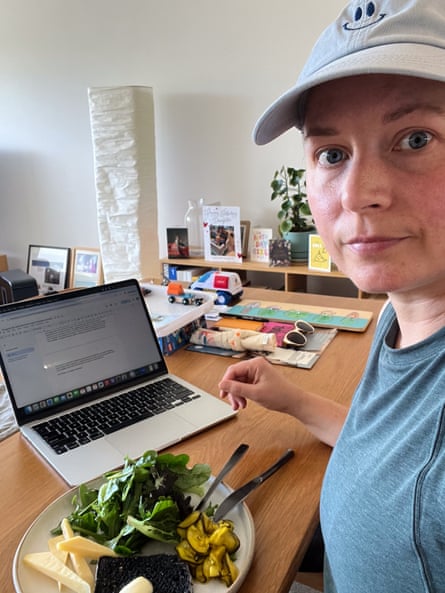
My week so far has been nonstop work or parenting, and going for a walk-jog to the harbour is such a novelty that it’s an instant dopamine hit. I don’t think I’d have left the apartment without needing to check this exercise box. By midday, my calves are sore, my right hip is creaking, but I’m breathing in lungfuls of salty air. I feel good.
Back home, there’s a pile of dirty plates in the sink, and it’s making my eyes twitch. I’m usually a tidy person, so holding back from housework (given that zero hours are associated with having a good day) is annoying. I decide to leave it to my partner, which feels a bit selfish of me.
I make lunch, avoiding eye contact with the dishes, when my child’s daycare calls about a minor incident. I’m close to picking him up, but he’s napping (and fine), so I don’t. It’s a good reminder that a day can change directions very quickly, so I shower and return to my desk.
It’s easier than usual to work for less than six hours, because I’ve already put in very long days this week. By 4pm, I send a hurried message to the group chat to see if anyone’s around for a catch up after daycare pickup. It’s a last-ditch attempt to meet the minimum 30 minutes of active socialising. But no dice. Everyone has plans. I’m gutted.
We go to the pub anyway, where, to my surprise, I spot a friend with her family, and we merge tables. Ninety minutes later, everyone’s eaten, we’ve laughed, and we’re happy we found the time to catch up. It simply wouldn’t have happened if we’d tried to plan it. I feel lighter from off-loading some parenting and health woes with a friend, and buoyed by her exciting future plans. I don’t usually manage to watch TV in the evenings anyway, but this is far more of a treat than endlessly scrolling my phone.
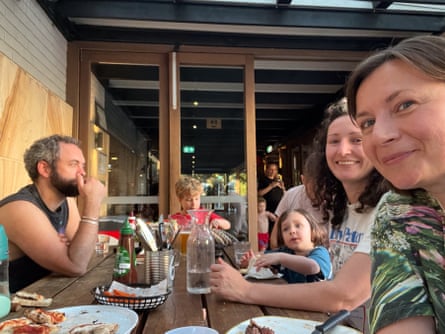
By 10pm, I’m fully cooked. I am also so proud of myself for exercising and socialising on a school day. It feels productive, energising. But I could not repeat this day tomorrow if I tried. (I have dishes to wash!) Without a doubt, it was a better-than-average day, and maybe it helped to have that intention from the beginning? I make a note to have at least one “good” day next week too. This could be a gamechanger.
‘Full and happy’
Sunil Badmani
Like many middle-aged people, I don’t get a lot of good days, at least as defined by the study. My days are rammed with everything I have to do: work, chores, care. I can go days without doing any of the things I love, like spending time with friends and family or exercising.
So trying to have a good day feels daunting. Apparently, I’m meant to fit in up to two hours socialising, no more than six hours’ working, up to four hours’ exercise – and no relaxing?

My editor reassures me it’s only up to those hours, and relaxing means watching TV, which the study says is bad for a good day. Phew!
I wake at 7am, that Ice Cube song in my head. I’m not a morning person. It takes me about 45 minutes to get out of bed. I scan headlines and do my daily puzzles. Solving Wordle in three and a perfect Connections makes me feel it’s going to be a good day.
I start work around 8am. I’m lucky to work from home. My job, managing events for a Sydney bookshop, is pretty flexible – although juggling a lot of logistical balls and up to 100 emails a day, I can end up doing 12-hour days if I’m not careful.
Around 10am, I walk our mini foxie, Alfie, for 30 minutes while making work calls.
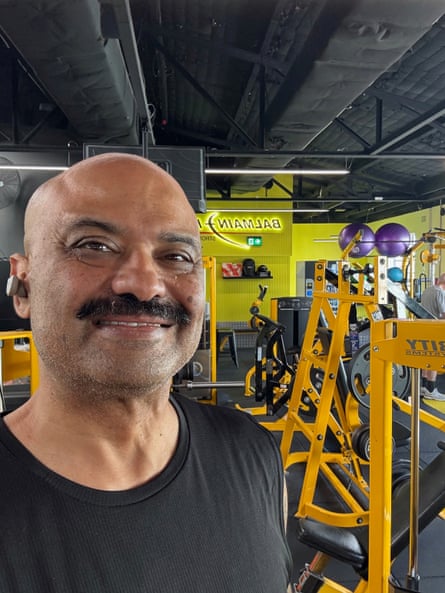
After two more hours’ work, I head to the gym for an hour. I used to hate exercise, but now I love it. I float out relaxed, invigorated and accomplished.
We’re having my wife’s best friend, Nina, over for her birthday. I get some groceries, do some prep, then work until 5pm, when I drop by the bookshop to help set up for an event. Because I know so many authors and publishers, events can feel like socialising, but it’s still work, and I still have to keep an eye on things.
At 6pm, I go to a farewell for two colleagues from an arts festival I work with. It’s bittersweet, but I love catching up with all these creative and warm people, heading home at 7pm feeling connected and inspired.
We feast in the garden on Nina’s favourites – martinis, T-bones, tiramisu. As the Bhagavad Gita advises, when the stomach is full, all the senses are content. We’re joined by our teenagers: a rare treat. As they grow up and we, our friends and parents get older, I treasure time with all of them more and more.
While I tried to include exercise to make my day good, socialising over the guidelines was inadvertent. But I felt like I spent the right amount of time with everyone, and I’m very happy I did. At around 11pm, full and happy, we head to bed. I read a fab new novel for 30 minutes, scan the headlines, and I’m out by 11:45pm.
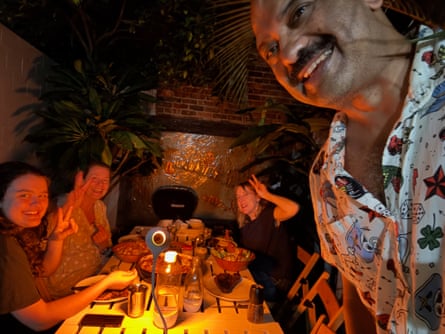
It’s been a very good day. Although I worked more than six hours, I got all my work done, and it didn’t feel onerous with all the breaks. And in the end, trying to have a good day made me realise how lucky I am, and not just today. I’ll keep trying.
‘Getting your body moving improves any day’
Doosie Morris
Freelance life is a blessing and a curse. Your schedule is your own, but the buck stops with you, and days can all too easily become a rolling carnival of overlapping obligations and diversions that challenge the concept of time.

This week is even more loose than usual – it’s school holidays, and we’re lucky to be housesitting by the sea. I start the “good day” experiment with a vague plan: do some work in the morning before heading out with my partner and two kids for a wholesome coastal walk. Housework is limited to feeding the chooks and guinea pigs we are looking after, which feels positively Arcadian.
I start my day drinking coffee in bed. I check work emails, peck away at pending assignments and take in the deranged headlines of the day. I count this all as work. I kicked my social media habit years ago, but I also know the line between staying abreast of current affairs and going on discombobulating information benders is perilously thin. So, today it’s no personal email, no podcasts, no Marketplace and limited online reading. Seriously refreshing.

Late morning, we set off for Cape Shank; the autumn sun breaks through the clouds as we drive through the rolling hills towards the piratey-sounding outpost. There is absolutely no denying that getting your body moving improves any day. I’m not sure this level of low-impact wandering around looking at seaweed and crabs counts as exercise, but it definitely counts as hanging out with the family. It’s sunny, it’s breezy, no one falls into a rockpool — it’s a vibe. But I’ve always been a wayfarer; most days, I’d do a similar amount of walking, and it’s not unusual for my family to spend a good chunk of our waking hours together, so apart from the idyllic scenery, this wasn’t a significant departure from the norm.

A few hours later, we retreat to the house, and I do another hour of focused work and freshen up. An old high school friend has obliged to help me with the crucial field reporting I’m undertaking. Socialise we must! We look over the moody bay, drink happy hour prosecco and laugh our heads off. The study suggests that after two hours of active socialising, the benefits plateau. In a lesson my friend and I should have learned long, long ago, there is also a point of diminishing returns when it comes to sparkling wine consumption. We choose to ignore it. After three and a half hours, we wisely call it a night. Two hours would have sufficed, but sometimes you just have to let the good times roll.
The rest of the evening falls into the ambient hang category. Back at the house, my partner cooks the family dinner, and instead of browsing online or joining everyone on the couch to watch a movie, I eat, shower and turn in early.

The takeaway: most days can be good days if we move our bodies, talk to mates, spend time with loved ones and don’t work too much, and I’m extremely fortunate to be able to tick those boxes regularly. If we can find ways to be intentional with our time, limit screens, get out in nature and give ourselves license to chill, they can be even better.